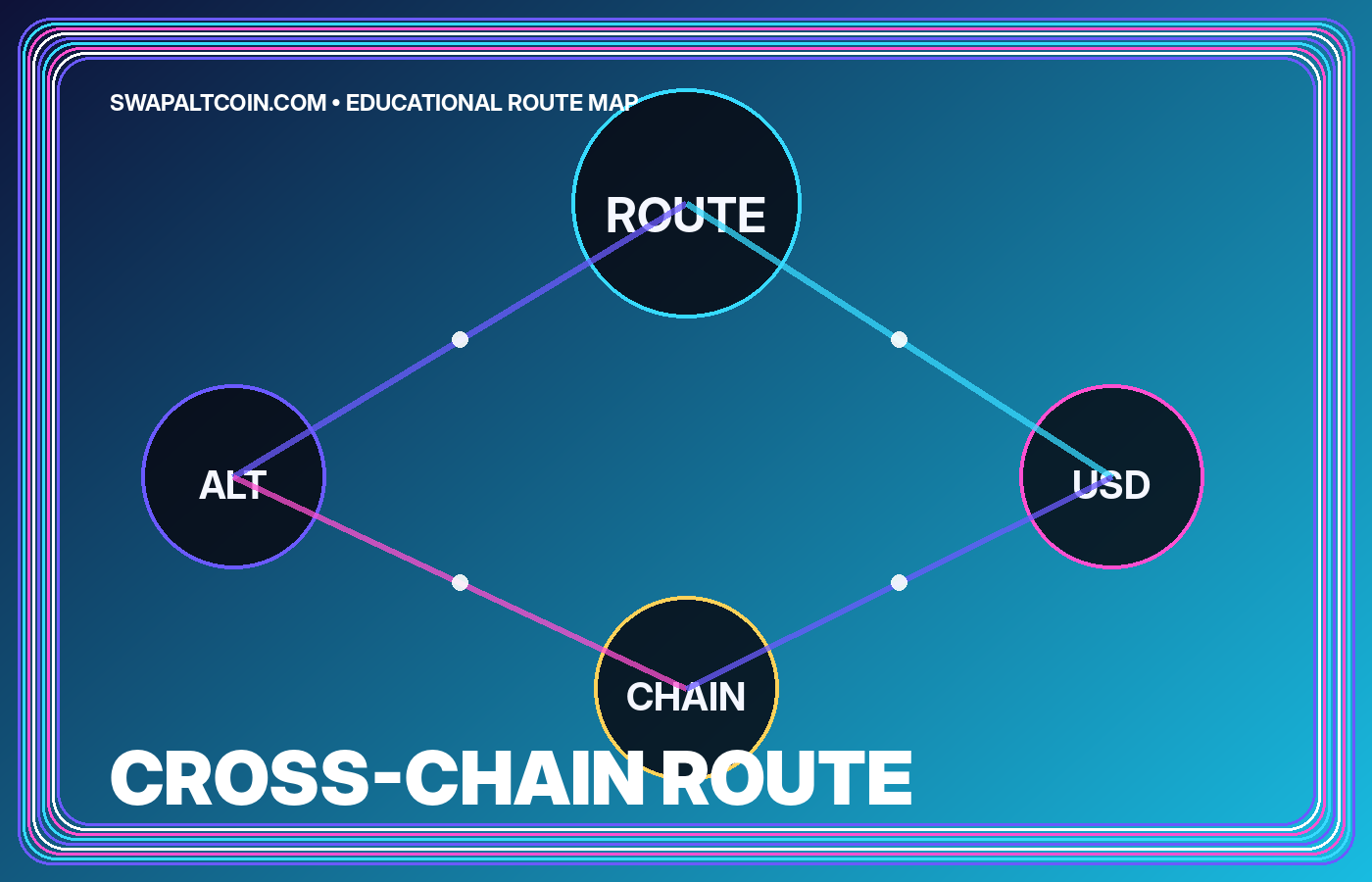
01Map the route end to end
Write down the source token and chain, source swap, bridge or messaging system, asset transferred, destination chain, destination swap, and final token. This reveals whether the route relies on wrapped assets or temporary intermediary exposure.
02Understand the bridge model
Cross-chain systems use different verification and custody models. Some rely on validators, relayers, light clients, liquidity networks, lock-and-mint structures, or canonical bridges. The user-facing button does not remove the underlying trust assumptions.
03Check finality and timing
Source-chain confirmation is not always the end. A bridge message may need additional confirmations, relayer action, destination execution, or a claim transaction. Review normal timing, expiry rules, and what happens during congestion.
04Plan destination gas
A cross-chain route can deliver tokens to a destination wallet without enough native currency to move them. Determine whether the route supplies gas, supports a gasless claim, or requires a separate balance on the destination network.
05Review failure and refund behavior
Ask where funds reside if a source swap succeeds but the bridge is delayed, or if the destination swap cannot execute. Some systems refund to the source chain, some deliver an intermediary asset, and others require support intervention.
06Prefer clarity over convenience
One-click routing can be useful, but a route you can explain is easier to verify and troubleshoot. If the interface does not show the bridge, contracts, minimum output, fees, and destination asset, treat that lack of detail as material.