Pools and order flow
Many DEX swaps use automated market maker pools, while others source signed orders or combine several venues. The route determines where pricing comes from, which contracts execute, and how fees and price impact arise.
Swap Altcoin to Stablecoins • Swap Between Altcoins • Cross-Chain Routes
DEX trading
A decentralized exchange can provide direct wallet-to-contract execution, but the user still needs to inspect token identity, permissions, route, liquidity, and transaction details.
Route map
The practical work is to identify the exact assets, networks, contracts, permissions, costs, and fallback behavior. The cards below form a repeatable review.
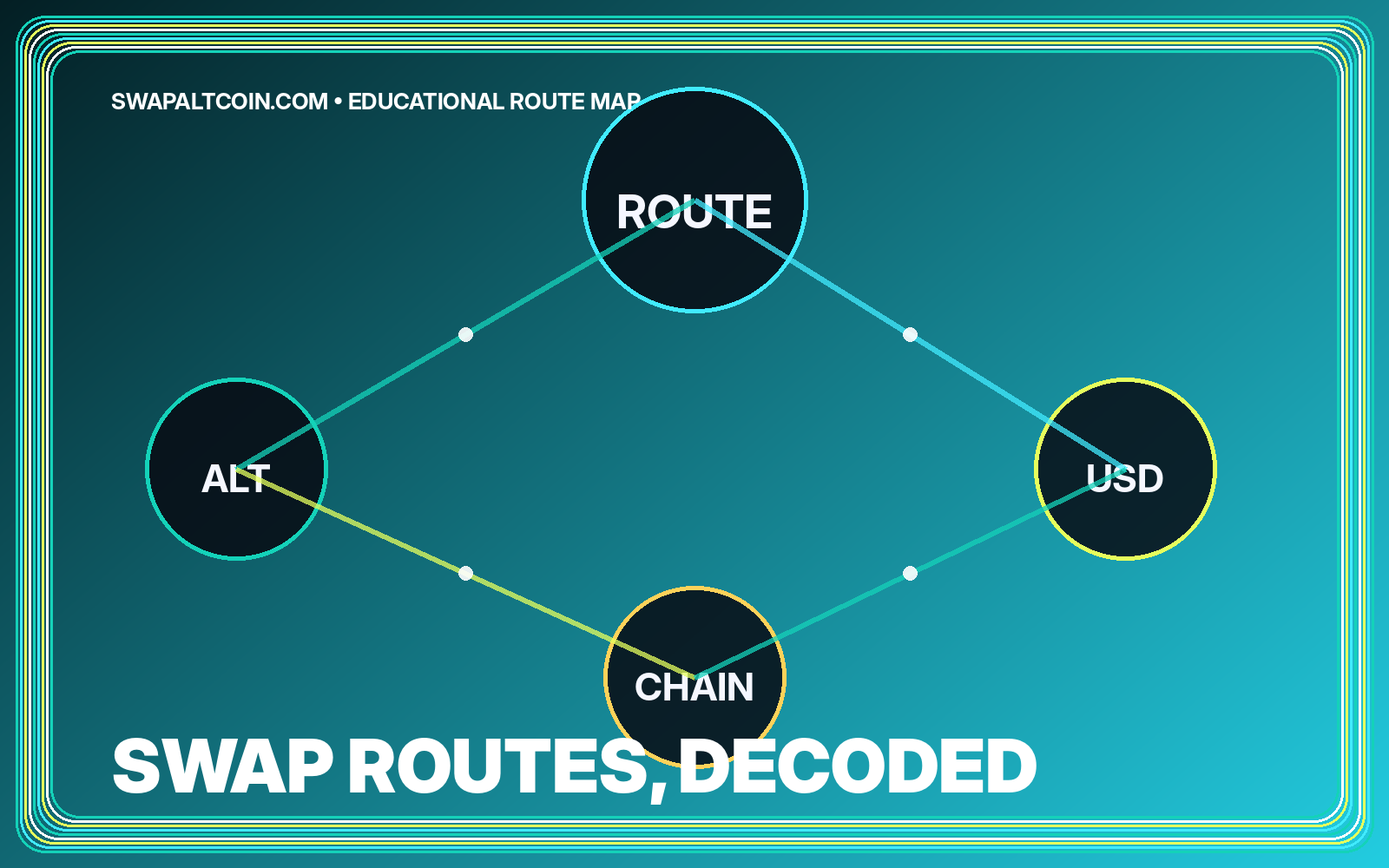
Many DEX swaps use automated market maker pools, while others source signed orders or combine several venues. The route determines where pricing comes from, which contracts execute, and how fees and price impact arise.
Price impact is the movement caused by your trade against available liquidity. Slippage is the difference between the expected and executed result as markets move. Both affect the minimum amount you may receive.
Fungible tokens often require approval before a DEX contract can spend them. Confirm the spender, amount, and network. Never treat an approval prompt as a harmless login step.
An aggregator can compare sources and split an order to improve expected output. The benefit must be weighed against added contracts, gas, quote complexity, and the reliability of each source.
Public transaction flows may be observed before inclusion in a block. Fast price movement or transaction ordering can change outcomes. Use sensible slippage limits and review protections offered by the interface or wallet.
Before signing, confirm the contract, chain, token amounts, recipient, approval or permit, network fee, minimum output, and deadline. A polished interface is not a substitute for transaction review.
Questions to resolve
A non-custodial DEX generally executes through smart contracts from your wallet, but contracts can still receive permissions or temporarily control assets during execution.
It is a smart-contract reserve of paired assets used to facilitate swaps under defined pricing rules.
The quote reflects the specific pool, route, fees, trade size, and network conditions rather than a universal market price.
An aggregator may route to multiple DEXs, market makers, or other sources. Its role is typically route discovery and transaction construction.
Email the SwapAltcoin.com editorial desk. No account or wallet connection is required.